
We work.
But we never just work.

Your grandfather, my father, was a school janitor. Before that, he worked on the grounds crew. The grounds crew was a start if you worked it right; it was also the end if you didn’t. Your grandfather was older. His body was seasoned for work by the farm where the work is never done. He worked it right.
Your grandmother, my mother, was a hostess at a restaurant when I was your age. She was young and beautiful. It wasn’t a good start. So she went to school. She got a degree, and then another. I remember the daycare at her college. It was hot in the summer, no shade, next to the parking lot. When she graduated, she wore a black gown and a flat square hat, there were flowers.
Your great-grandparents were farmers in their Irish homeland and immigrant hustlers from the same Italian valley. While the Irish farmed, the Italians did piecework in tenements. While the Irish farmed, the Italians got jobs in banks and shops. While the Irish farmed, the Italians became cops and schoolteachers.
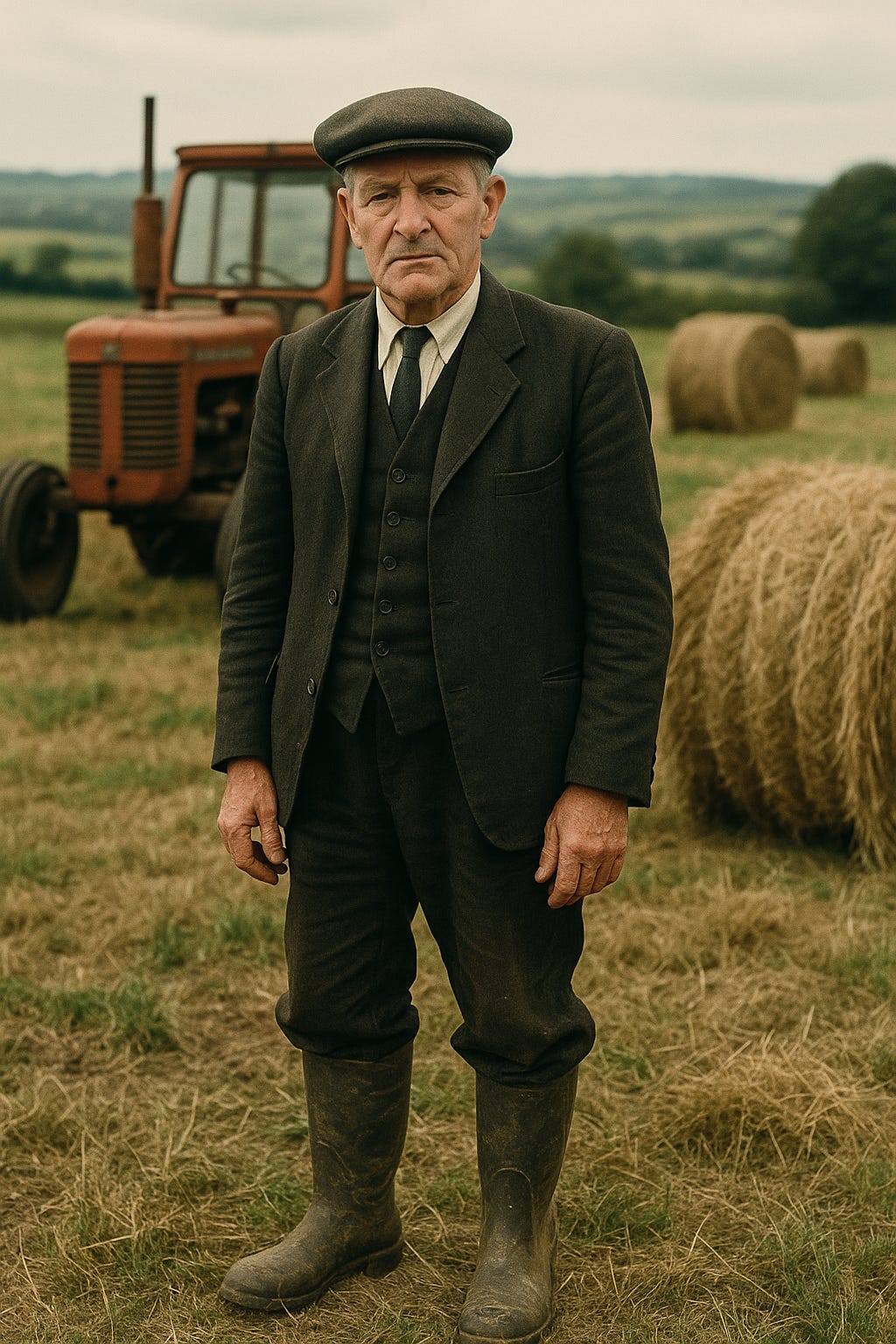
Your people work.
Work isn’t the whole story.
There is a sculptor who pulls stone-hard oaks from the bog and coaxes swoop-necked swans from them with chisels and grinders. She works in an old cow shed. There is a photographer who makes art from the spaces overlooked and unthought about - ditches and barbed wire fences. There was a dressmaker who opened a shop in her neighborhood, it went under when she gave away one too many dresses. There was a jewelry designer who won ballroom dance competitions. There is a drag queen built like a powerlifter, who makes magic in the nightclubs in a city by the bay.
There were always excellent cooks and bakers, gardeners and cross stitchers. Tables filled with steaming dishes, ingredients pulled from the ground outside the window, or extended from tight-budget grocery lists. There was always room at the table, by the fire, an extra cup of tea, a tricolor cookie, an apple tart. Food, always.
Your grandfather wrote his first book longhand on unlined sheets, tucked into a basement apartment. It took him ten years. The only people who read it were the publishers who rejected it. It was fine, he said, it helped him find his voice. Ten years, writing longhand, a story no one read.
He learned how to type from library books. He wrote more, at the edges of the days in between sweeping floors and cleaning up kid puke in the cafeteria and working on his tumble-down house in the evenings. He published books and did readings, still, while he pushed a broom and helped out younger janitors, immigrants like him.
We work. But we never just work.
Great, stuff. I’m stoked to see you writing these.